MOTS-c across very different bodies
The human dialysis cohort and the mouse performance experiments pull the conversation in different directions. They also ask different questions.
Blood levels during dialysis
The cohort of 94 people on chronic hemodialysis followed participants for a median of 26.5 months. Higher naturally circulating MOTS-c was associated with a combined outcome of death or non-fatal cardiovascular events. Adding the blood measurement improved the study's risk estimates a little.
I approached the human paper expecting a simpler treatment argument. Instead, it makes the circumstances harder to ignore. These were people whose kidneys required machine-assisted blood cleaning, and the study measured a peptide their bodies already made. Nobody received MOTS-c as treatment.
Whether a high level reflects stress, compensation or another process remains a question. The association establishes neither benefit nor harm from giving additional MOTS-c. Of all the awkward pieces here, this complication teaches me most.
A blood marker can help describe a risk without identifying a treatment that will change it.
MOTS-c mouse experiments
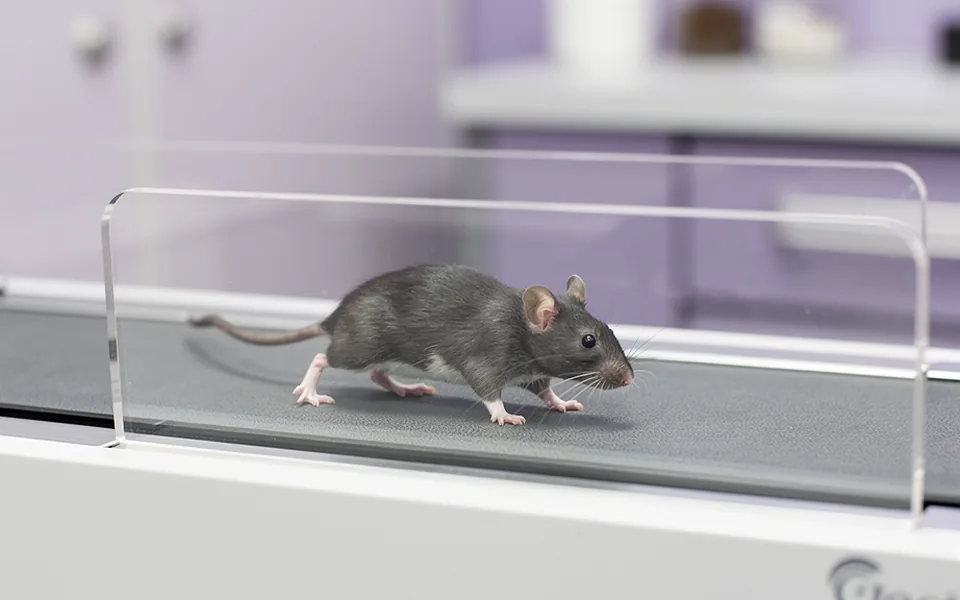
The exercise and aging experiments found improved physical performance when young, middle-aged and old mice received MOTS-c. The work also examined naturally produced MOTS-c in relation to exercise. A mouse running farther on a treadmill is a concrete result; translating it into improved human movement remains unfinished.
Another study used cell-free assays and mouse experiments to identify CK2, a protein that MOTS-c binds and activates. Related mouse findings included greater muscle glucose uptake and less muscle atrophy. Identifying CK2 gives the explanation something I'd expect further experiments to test. It still leaves the human treatment question open.
Movement inside a cell
MOTS-c's instructions come from mitochondrial DNA, in the energy-producing parts of cells. In human and mouse cell experiments under metabolic stress, MOTS-c moved into the nucleus and helped alter gene activity. Metabolic stress here means a disturbance of the cell's energy conditions.
The review of stress, metabolism and aging gathers this work into a broader account. I relish the movement between compartments more than loose claims about “energy.” It describes something cells did under experimental conditions, with a mechanism that can be challenged by further work.
Human treatment evidence
The evidence in this collection has no completed human efficacy trial showing that added MOTS-c improves health. Its usual human side effects, pharmacokinetics and safe treatment amounts remain unestablished. MOTS-c is not approved for human treatment and is prohibited in elite sport; the sporting prohibition supplies no proof of benefit.
Claims about fat loss, longevity or performance run ahead of those human data. Reliable personal accounts are too scarce to make a useful safety list. To connect the dialysis finding, the mouse results and a human treatment claim, I'd need an intervention study with known treatment and systematic follow-up.