Tirzepatide and the direct comparisons
The head-to-head results are convincing about group differences. The leap from those differences to a medicine for every individual feels far shakier to me.
Diabetes and obesity comparisons
The diabetes comparison and the obesity comparison need separate names. SURPASS-2 enrolled 1,879 adults with type 2 diabetes and followed treatment for 40 weeks. Tirzepatide produced greater average reductions in blood sugar and body weight than the semaglutide regimen tested.
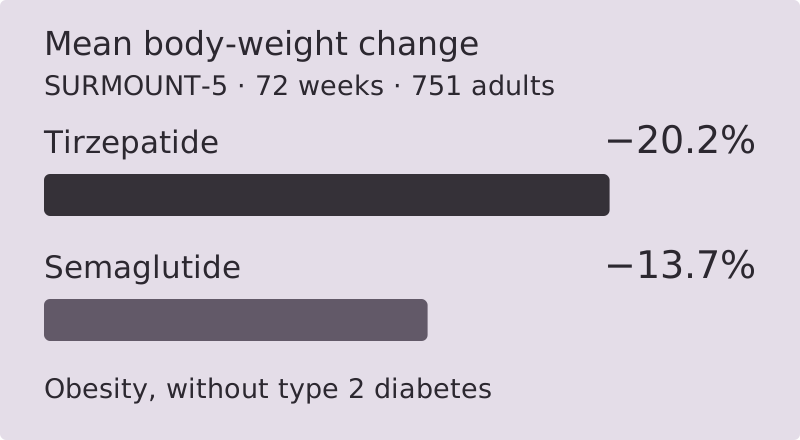
SURMOUNT-5 enrolled 751 adults with obesity without type 2 diabetes. At 72 weeks, average weight change was −20.2% with tirzepatide and −13.7% with semaglutide. The bars below show that group comparison. Individual results have no bars here because these means cannot reconstruct them.
The comparison earns my trust when its boundaries remain visible. Each trial tested particular regimens in particular people. Neither one establishes a superior result for every person, or a rule for changing treatment.
The diabetes trial and the obesity trial used different populations, durations and treatment regimens.
The placebo-controlled weight trial
The SURMOUNT-1 trial enrolled 2,539 adults without diabetes. Participants had obesity, or overweight with a weight-related complication. At 72 weeks, the tirzepatide groups had mean weight changes ranging from −15.0% to −20.9%; placebo had a mean change of −3.1%.
Those results explain the excitement. The same paper also records stomach and bowel problems, chiefly mild or moderate and more frequent while treatment amounts increased. The selective retelling bothers me: the successful average and the difficulty staying with treatment arrived in the same research.
Receptor experiments
Tirzepatide acts at GIP and GLP-1 receptors, proteins that receive hormone signals. Its discovery paper moves from cell and mouse experiments into early human tests. An added fatty part helps it bind blood proteins and slows its removal.
Later cell and isolated-islet experiments found an uneven pattern of receptor activity: stronger engagement of GIP receptors, with GLP-1 signaling favoring some cellular responses over others. “Biased” in that title describes signaling preferences. It says nothing about a participant's weight by itself. I like the molecular ingenuity; deciding who benefits still requires the clinical trials.
Tolerability and interactions
A review of nine trials involving 9,871 people found an increased combined risk of gallbladder or bile-duct disease. It found no statistically significant increase in pancreatitis; rare events still leave uncertainty. Bile is the digestive fluid stored in the gallbladder and carried through those ducts.
The clinical reference chapter covers tirzepatide's prescription status and safety. Its thyroid warning rests on animal findings, with human relevance unresolved. Slower stomach emptying can affect other oral medicines and raises a concern about stomach contents entering the lungs during anesthesia. Some diabetes medicines can add a risk of low blood sugar.
People describe less preoccupation with food, bowel trouble, changes in energy and weight plateaus. Those reports are anecdotes rather than clinical evidence. They make the experience sound less uniform than a trial average, but cannot supply a reliable personal forecast or a side-effect rate.